
When Care Crosses Borders: Understanding International Patient Transfers
അതിർത്തികൾക്കപ്പുറവും കരുതലോടെ — ഡൊമസ്റ്റിക് ഇന്റർനാഷണൽ യാത്രകളിൽ മെഡിക്കൽ എസ്കോർട്ട് സേവനങ്ങളുടെ പ്രാധാന്യം.

TGCP Speaks | Medical Escort Services | The Good Care People
Travelling across international borders can be challenging for patients recovering from illness, undergoing treatment or requiring additional medical assistance. For their families, arranging such a journey often involves important decisions, unfamiliar procedures and understandable concerns about the patient's comfort and well-being.
Unlike ordinary travel, an international patient transfer may require medical assessment, airline clearance, professional escort assistance and coordination between healthcare facilities.
At The Good Care People (TGCP), our experience undertaking international patient transfers has reinforced a simple belief: every patient deserves a journey planned around their individual medical needs, dignity and well-being.
Understanding International Medical Escort Services
International medical escort services assist patients who require professional healthcare support while travelling between countries.
Depending on the patient's medical condition and the recommendations of their treating medical team, travel arrangements may involve:
Commercial airline travel with an accompanying medical professional.
Special seating arrangements or airline-approved stretcher facilities.
Medical equipment and supplementary oxygen, where clinically necessary and approved.
Ground ambulance coordination at the departure and arrival locations.
Specialised medical transport, including dedicated air ambulance services where appropriate and available.
Not every patient requires the same arrangements. Some may travel comfortably on a commercial flight with suitable assistance, while others may need more extensive clinical support or a different mode of transportation.
The appropriate arrangement depends on individual medical assessment, available facilities and the relevant airline and regulatory approvals.
Medical Assessment and Fitness to Fly
An important part of international patient-transfer planning is establishing whether the patient's condition is suitable for air travel.
The treating medical team evaluates the patient's health status, care requirements and potential risks associated with the journey.
Airlines may also require a Medical Information Form (MEDIF), supporting clinical documents or additional medical clearance when a passenger requires special assistance.
Requirements vary between airlines and according to the patient's condition and requested arrangements.
Depending on the circumstances, advance approval may be necessary for medical escorts, supplementary oxygen, portable medical equipment or stretcher accommodation.
A treating doctor's assessment and airline acceptance are separate considerations. Both must be addressed where applicable.

More Than Just an Airline Journey
A medically assisted international transfer often involves more coordination than the flight itself.
The process may include communication with the sending hospital, arrangements for suitable ground transportation, airline medical-clearance procedures and coordination with the receiving healthcare facility.
Medical escort personnel may accompany the patient during the journey according to the agreed clinical care plan and their professional qualifications.
At the destination, suitable onward transport and a clear handover help maintain continuity of care.
Every stage requires appropriate planning, communication and compliance with applicable requirements.
From Our Experience: Three Different Patient Journeys
At The Good Care People, our team has undertaken international patient transfers involving different levels of medical assistance, travel arrangements and professional support.
The following experiences illustrate how individual patient needs influence the planning and coordination of international medical travel.
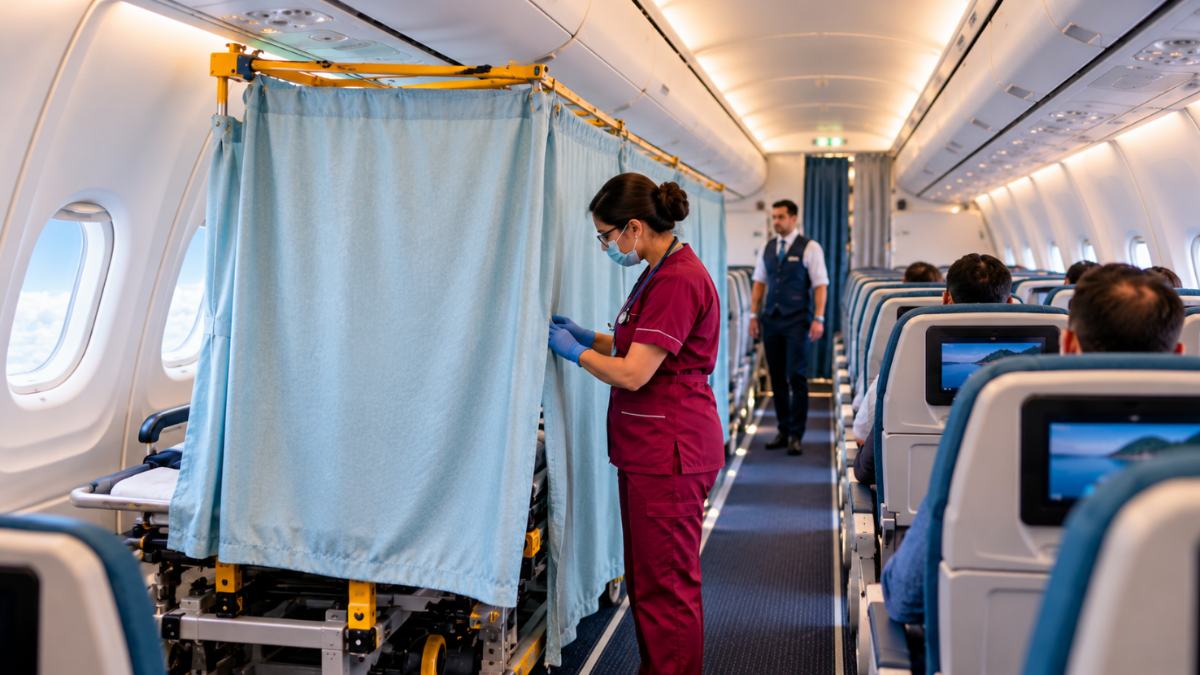
1. When a Patient Requires Stretcher Assistance
One of our international assignments involved a patient requiring stretcher-based travel and continuing nursing support.
The arrangement called for coordination between the medical escort team, airline and ground transportation providers, taking into account the patient's care requirements throughout the journey.
This experience reinforced the importance of advance preparation, clear communication and the availability of appropriate professional assistance.
2. When Commercial Air Travel Is Appropriate
In another international assignment, TGCP assisted a patient whose assessed medical condition permitted travel on a commercial airline with suitable seating arrangements and an accompanying medical professional.
The focus was on providing appropriate support, considering the patient's comfort and coordinating the necessary travel arrangements.
This experience demonstrated that international medical travel does not always require a dedicated air ambulance or stretcher arrangement.
The most suitable approach depends on the individual patient's medical condition and the relevant approvals.
3. When a Patient Requires Higher-Level Medical Support
TGCP has also undertaken an international patient transfer requiring a higher level of medical assistance and coordination between healthcare facilities.
Such assignments involve additional considerations relating to professional escort requirements, medical support, travel arrangements and communication with the receiving healthcare team.
This experience highlighted the importance of coordinated planning and clearly defined responsibilities when arranging medically complex international journeys.
What These Journeys Have Taught Us
Although the circumstances of these three transfers were different, they shared an important principle:
Every international patient transfer must begin with understanding the individual, rather than simply arranging transportation.
Medical considerations, professional responsibilities, travel requirements and family expectations all influence the planning process.
For TGCP, these experiences have reinforced the value of preparation, communication and patient-centred service.
These summaries are drawn from actual TGCP international patient-transfer assignments. Patient-identifying information and detailed clinical records have been intentionally excluded to respect confidentiality. The experiences are not presented as clinical case reports or guarantees of future outcomes.
What Families Should Consider Before Planning a Transfer
Families exploring international medical travel can benefit from discussing several important matters with their treating healthcare team and the proposed transport providers.
These include:
Whether the patient's condition is suitable for the proposed journey.
What level of medical assistance may be required during travel.
Whether the airline accepts the proposed medical arrangements.
What clinical documents, permissions and travel documents are necessary.
How transport to and from the airports will be organised.
Whether the receiving healthcare facility is prepared for the patient's arrival.
Early discussions with the relevant professionals can help families understand the available options and the practical requirements before making travel commitments.
Care That Crosses Borders
International patient transfers bring together healthcare, aviation, transportation and human relationships.
For patients and families, the journey may represent a return home, access to further treatment or an important stage of recovery.
At The Good Care People, our experience in international medical escort assignments has strengthened our commitment to responsible coordination, appropriate professional support and respect for patient dignity.
We believe that the most meaningful aspect of medical travel is not simply reaching a destination, but ensuring that the patient's individual needs remain central to the planning process.
Care Is Personal. So Are We.
Enquire About International Medical Escort Assistance
Families seeking assistance with international medical travel may contact The Good Care People to discuss their requirements, available services and the process for an individual medical and logistical assessment.
The Good Care People — Medical Escort Services, Kochi, Kerala
Medical, Aviation & Travel Disclaimer
This article is provided for general educational and informational purposes only. It does not constitute medical, legal, aviation or regulatory advice.
International patient transfers require individual clinical assessment and compliance with applicable airline policies, medical-clearance procedures, aviation regulations, immigration requirements, customs rules and the laws of the countries involved.
The treating medical professionals are responsible for determining the patient's clinical suitability for travel within their professional scope. Airlines, transport operators and relevant authorities independently determine whether proposed transport arrangements can be accepted or authorised.
Medical escorts, specialised equipment, oxygen, stretcher facilities, airport assistance and transport services are subject to relevant approvals, operating requirements and availability.
The Good Care People does not guarantee medical outcomes, airline acceptance, regulatory permissions or uninterrupted travel. Services are provided or coordinated according to the applicable professional responsibilities, individual care requirements and authorised arrangements.
The experience summaries are intentionally generalised to protect patient confidentiality and should not be interpreted as clinical recommendations for other patients.
Individuals considering medically assisted international travel should consult qualified healthcare professionals and the relevant authorised service providers before making arrangements.
References and Further Reading
International Air Transport Association (IATA) — Medical Manual
Air India — Medical Needs and Clearance Requirements
Emirates — Medical Information Form (MEDIF) and Travel Health Guidance
Airline procedures, medical requirements and transport arrangements may change. Readers should consult the relevant providers for the latest applicable guidance.